


American Pit Bull Terrier History & the Evolution of the American Bully
A preserved and grammar-corrected archive edition of Chapter 2 from The Bully Bible: Everything You Need To Know About The American Bully, originally published by BULLY KING Magazine in 2017.
This article republishes original BULLY KING Magazine educational material first published as part of The Bully Bible in 2017. The historical substance, editorial perspective and chronology have been preserved. Grammar, punctuation, formatting and readability have been corrected where appropriate. Material modern clarifications are separately identified as 2026 Editorial Updates rather than silently rewriting the historical record.
BULLY KING Magazine is republishing selected historical articles and chapters on its owned publishing properties while its long-running Medium account and publication remain unavailable following disputed platform reports. Before the suspension, those Medium publishing properties had accumulated more than five million reads. Republishing these archived works allows readers to continue accessing material that was previously distributed through those channels while also preserving the original publication chronology.
Publication of this updated web edition does not replace, supersede or reset the chronology of the underlying original work. Earlier source copies, publication records and independently dated materials have been retained where available.
Supplementary source: BULLY KING Magazine later republished and expanded this subject on its Shopify publication on January 15, 2019. Relevant images, video and explanatory material from that web edition are incorporated below as supplemental archive material and are not presented as if they were part of the original 2017 manuscript.
The American Pit Bull Terrier and the American Bully are related historically, but they are not the same modern breed. The American Bully developed from American Pit Bull Terrier-based stock and other bull-type influences through selective breeding toward a heavier companion-dog phenotype and a people-oriented temperament. Current registry standards treat the American Bully as its own breed.
Historical Chapter Text: The American Bully's Early Direction
Archive treatment: Original 2017 substance and voice preserved; grammar, punctuation, paragraphing and obvious typographical errors corrected. Modern factual context appears only in separately labeled editorial updates.

American Pit Bull Terrier and American Bully comparison preserved from Chapter 2 of The Bully Bible.
Today's American Bully began its establishment around 20 years ago with the purpose of creating the ultimate family companion with impressive physical attributes. The American Bully breed evolved through careful and selective breeding of the American Staffordshire Terrier, American Pit Bull Terrier and various bulldog breeds, designed to place an emphasis on maintaining a loyal, devoted and steadfast temperament while enhancing desired physical characteristics.
The traits of dog aggression and gameness were purposely bred away from because the developing breed had no future purpose for those traits, with the exception of hunting and sporting contexts associated with other working dogs. A new style of breed was formed and is now promoted as the American Bully. This breed still carries the ancestry of the “Pit Bull” and still has to deal with the reputation attached to that name, but it is not the same breed.
Conformation shows and events were showing the world why this could be a great breed and changing public perception in large numbers. These types of events helped educate the public on the American Bully and what made it a great breed, while also helping break down negative stereotypes about both the dogs and the people involved with them. This was achieved through years of selective breeding.
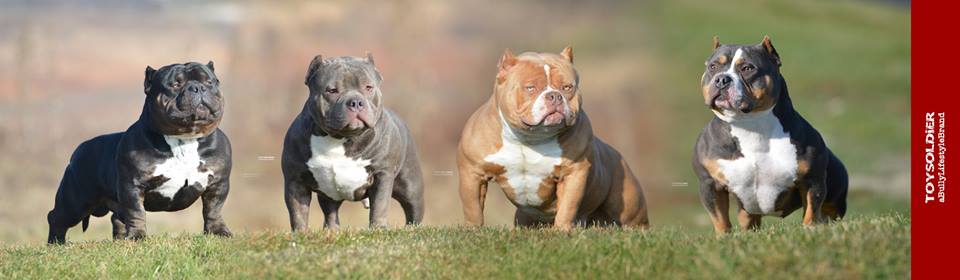
Legacy BULLY KING Magazine imagery used in the later web edition to illustrate the American Bully's development toward heavier structure and a companion-focused temperament.
The American Pit Bull Terrier and American Bully Are Not the Same Breed
The American Pit Bull Terrier and the American Bully are both incredible breeds, but they are NOT the same breed.
The American Bully possesses the loyalty and stability of the American Pit Bull Terrier while retaining the sociable, amiable and outgoing temperament associated with the American Staffordshire Terrier and various bulldog breeds. Initially, registries were reluctant to acknowledge bulldog influence in the developing breed, but registries including the ABKC eventually recognized the American Bully as its own breed.
This unique breed is noted for displaying a strong willingness to please its family. Physically, the American Bully was being selected for an impressive, solid, defined and athletic build that denoted strength while retaining functional movement.
The American Pit Bull Terrier is a wonderful breed of dog, well known for intelligence, strength and loyalty. In recent years, the breed has often been portrayed as overly aggressive and dangerous. Public discussion also frequently groups several different breeds and mixes under the broad label “pit bull,” which complicates bite statistics and breed identification.
The original 2017 chapter stated more categorically that DNA testing had disproved the identification of many dogs involved in reported attacks. The broader point is preserved, but the modern wording is more precise: visual identification of “pit bull-type” dogs can be unreliable, and the label is often applied to multiple breeds and mixed-breed dogs. Individual incidents should not be treated as proof about an entire breed.
Historical Background of the American Pit Bull Terrier
While the pit bull does indeed possess a feisty and spirited character, the history of the breed reveals a much more complex tapestry of temperament and personality.
Like many modern breeds, it is impossible to be completely sure of every detail of the American Pit Bull Terrier's long history. However, many pit bull enthusiasts have traditionally traced the origins of bull-type dogs back to antiquity and the Molossian family of dogs. The Molossian family takes its name from the Molossi, a people of ancient Greece associated in later histories with robust, muscular dogs used in warfare and guarding.
During this same broad historical period, strong mastiff-type dogs were also used for other purposes. Early trade and migration helped spread working dogs between regions, and mastiff-type populations in Britain and continental Europe contributed to the wider ancestry from which later bulldog and bull-and-terrier types would emerge.
The original chapter described Roman-era fighting and guarding dogs and the movement of powerful British dogs through the Roman Empire. Over centuries, local working dogs were crossed and selected for different purposes, creating a complicated genetic and historical background for later bulldog-type dogs.

Historical pit bull-type imagery retained from BULLY KING Magazine's later web treatment of this chapter topic.
Very early Molossian-to-modern-breed narratives are traditional historical reconstructions, not continuous documented pedigrees. They are preserved here as part of the original chapter's historical framework, but readers should distinguish breed folklore and historical interpretation from modern pedigree or genomic evidence.
Baiting, Ratting and the Bull-and-Terrier Era
Sadly, later generations also used bull-type dogs in cruel blood sports. When the Normans invaded England in 1066, the historical narrative described a sport called “baiting.” Baiting was associated with butchers who kept strong dogs to help control unruly bulls as they were moved to market. When a bull stepped out of line or became uncontrollable, dogs could be used to grip and hold the animal until a handler regained control.
Like most dog owners, the butchers were proud of their canine companions and their stubborn tenacity in dealing with much larger and potentially dangerous bulls. Public displays were eventually arranged to showcase the dogs' abilities and to entertain crowds. By the sixteenth century, baiting rings existed in many English towns. The popularity of these events drew spectators from many levels of society and was reinforced by the mistaken belief that prolonged baiting improved the tenderness of meat.
In baiting events, one or more dogs were set on a bull and expected to continue until the animal collapsed from fatigue, injuries or both. These episodes could last for prolonged periods. As public tastes changed, other animals were also subjected to baiting.
In 1406, Edmond de Langley, Duke of York, produced a treatise for Henry IV commonly known as The Master of Game. The original chapter referenced the “Alaunt,” an old type of strong hunting and baiting dog, and later artwork depicting lean, muscular dogs with features familiar to students of bull-and-terrier history.
Baiting was made illegal by the British Parliament in 1835. However, the legislation did not immediately eliminate underground animal-fighting culture. Attention turned to pursuits such as ratting, in which dogs were placed in pits with rats and timed. The “pit” terminology associated with later pit bull naming is commonly connected in breed histories with these pit-based contests.
Eventually, illegal dog fighting became another underground blood sport because it could be concealed more easily than large public baiting events. Dog fighting favored smaller and more agile animals than those used in bull baiting, and bulldog-type dogs were crossed with terriers known for speed, intensity and persistence. The result was the bull-and-terrier type that became an important ancestor of later pit bull terriers.
Dog fighting was an extremely cruel and sadistic pursuit. The dogs were conditioned for combat and denied normal lives for the purpose of entertainment and gambling. The historical record of that abuse matters because it shaped selection for certain working traits, but it should never be romanticized or repeated.
From Britain to America: The Pit Bull as an All-Purpose Dog
When English and other British immigrants came to America, their dogs came with them. Not surprisingly, dog fighting existed in America during the nineteenth century. However, as settlers traveled west, pit bull-type dogs also took on a broader and more humane function.
On the frontier, they served as all-purpose dogs. In addition to helping with cattle and other livestock, they were valued as guardians protecting families and animals from thieves and predators. That working and family history is an important part of the breed's story.

BULLY KING Magazine's later web edition emphasized the pit bull-type dog's American farm, frontier and family-working history.
Despite that broader history, pit bull fanciers faced an uphill battle in gaining official recognition. The American Kennel Club was formed in 1884 to promote the interests of purebred dogs and their owners through organized events and registration.
The performance function historically associated with fighting dogs presented an obvious problem because dog fighting was illegal and organized kennel clubs understandably did not want to endorse it. In response to the AKC's unwillingness to register the American Pit Bull Terrier under that name, the United Kennel Club was formed in 1898 and the American Pit Bull Terrier became one of its foundational breeds.
Registry Recognition and the Staffordshire Terrier Split
Ultimately, the AKC recognized dogs from the same general family in 1936 under the designation Staffordshire Terrier, named for the English region associated with the development of bull-and-terrier dogs. The name was later changed to American Staffordshire Terrier.
Over time, the AKC American Staffordshire Terrier and American Pit Bull Terrier populations developed along partly separate registry paths. Although closely related historically, selective breeding under different registries and standards produced meaningful differences in modern populations.
Over the years, the pit bull-type dog also became a beloved symbol of America.
Sergeant Stubby and the Pit Bull-Type Dog in American Culture
In World War I, a dog named Stubby captured the heart of the nation. Stubby served with the 102nd Infantry and was credited in popular accounts with warning soldiers of danger, locating wounded men and participating alongside American troops. For his service and celebrity, Stubby became one of the best-known dogs of the war.
Sergeant Stubby was a stray, homeless dog who saw combat and became a genuine American war-dog legend. The original chapter's tone was a little less restrained: “This friggin' dog/Battle-Cat hybrid” became famous for learning military routines, accompanying the men and becoming part of unit life. That personality is part of the original BULLY KING voice, so we're leaving it here.
Stubby returned from the war to a hero's welcome and later became associated with Georgetown University. Over the years, many famous Americans have also owned pit bull-type dogs, and the dogs appeared repeatedly in American popular culture.
Pit bull-type dogs crept into the hearts of Americans in a variety of ways. RCA's famous “His Master's Voice” imagery, Buster Brown advertising and especially Petey from the Our Gang/Little Rascals films all contributed to the public image of sturdy, expressive family dogs.

Our Gang / Little Rascals historical image featuring Petey, preserved from the original 2017 Chapter 2 manuscript.
Public Perception, Misidentification and Breed-Specific Laws
At the time of the original chapter, the American Pit Bull Terrier and other pit bull-type dogs were used in many legitimate roles, including search work, therapy settings and farm life. Even so, negative publicity and illegal dog fighting contributed to pressure for breed-specific restrictions in some cities, housing systems and insurance markets.
Pit bull-type dogs bore much of that backlash because of their visibility and popularity. Public concern produced legislative action in various jurisdictions, and the mere label “pit bull” could carry serious consequences for a dog and its owner.
The original 2017 chapter was especially critical of enforcement systems that identified dogs primarily by appearance. That frustration was expressed bluntly and included criticism of jurisdictions where dogs identified as pit bull-type faced seizure or euthanasia. The point remains: visual identification can be uncertain, and policy decisions can have life-or-death consequences for individual dogs.
Pit bulls and people can live harmoniously when owners provide responsible care, management, training and socialization. Strong dogs require responsible owners. No dog should be left unsupervised with very young children, regardless of breed.
The 2017 chapter used then-common “pack leader” and household-dominance language. Current behavior guidance is better framed around early socialization, management, clear routines, humane reward-based training and qualified professional help when behavior concerns arise.
The Evolution of the American Bully
As we covered in the first chapter, the American Bully is an offshoot of American Pit Bull Terrier-based stock and was created to give that foundation a new direction and outlet, according to the ABKC. At least, that was the politically correct answer offered in the community at the time.
The original 2017 chapter also reflected a long-running breeder debate: many people believed that breeders pursuing a larger, heavier and more exaggerated “pit bull” look introduced various bulldog breeds into early programs, sometimes with pedigree histories that did not fully document every influence.
Regardless of exactly how every early line developed, the result was an extremely physically impressive animal: a dog retaining recognizable pit bull ancestry and outline, but selected for heavier bone structure, more muscle mass and an increasingly distinct bully phenotype. This developing breed went on to become the American Bully.
The temperament was a major bonus. The dogs were increasingly selected as laid-back companion animals rather than for the historical working traits associated with fighting strains.
There is bulldog influence in the makeup of the American Bully. Whether individual breeders in 2017 liked that history or not, the developing breed had already moved beyond being simply an American Pit Bull Terrier. The chapter's warning was that breeders trying to take shortcuts by crossing a modern Pit Bull with a Bulldog in hopes of instantly producing an American Bully were taking steps backward. Likewise, mixing in unrelated breeds simply to chase “exotic” labels risked damaging health, structure, consistency and breed identity.
Fast-forward to 2017: the American Bully was exploding in popularity internationally. From Mexico to Spain, Brazil, China, the Philippines and beyond, the American Bully had become a phenomenon. In just about every corner of the world, stories were echoing about this new breed.
For good reason, too. On top of being one of the most visually impressive companion breeds in the bully world, well-bred American Bullies could make excellent family companions and demonstrate an exceptionally people-oriented temperament.
The original chapter called the American Bully “the fastest growing breed in the world” in 2017. That statement is preserved as period commentary, not presented here as a verified global statistical ranking. What is clearly documented is the breed's substantial international expansion and continuing registry/show presence.
Supplementary BULLY KING Web Edition Material: 2019
The following points come from BULLY KING Magazine's January 15, 2019 web edition on the same subject. They are included here because they add useful context, imagery and reader guidance while remaining chronologically separate from the original 2017 Chapter 2 manuscript.
The Purpose Behind the American Bully
The later BULLY KING web edition described the American Bully as a deliberate move toward a family-focused companion: retaining loyalty, courage, confidence and people focus while developing a heavier, wider, more compact and more muscular outline than the traditional American Pit Bull Terrier.

The later web edition used show imagery to explain how conformation events helped present the American Bully as a distinct companion breed with its own type and purpose.
Temperament Was the Real Selling Point
The web edition emphasized that appearance may draw attention first, but stable temperament is what made the breed broadly appealing. It described the desired American Bully as confident, affectionate, people-oriented and eager to please, while stressing that structure, health, movement and temperament must work together.
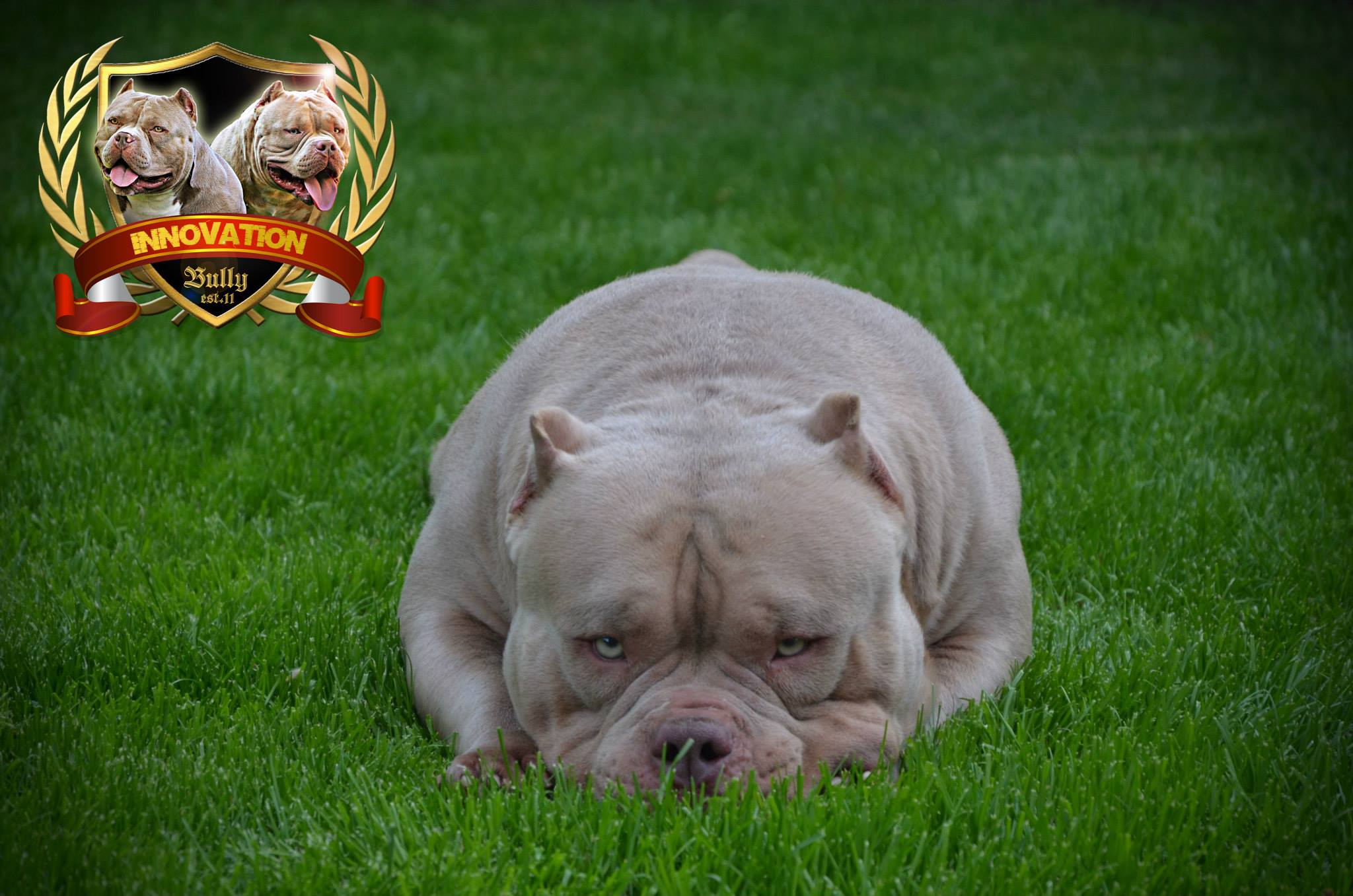
A later BULLY KING image illustrating the companion temperament and family-oriented direction emphasized in the American Bully.
Worldwide Growth and Modern Buyer Education
The 2019 edition also documented the breed's rapid international spread and warned readers not to confuse legitimate breed classes with marketing labels. Its buyer guidance remains relevant: research registry standards, health, temperament, structure, pedigree, contracts and breeder practices rather than buying on color, hype or a label alone.

The American Bully grew from a U.S. movement into an international breed community.
2026 Editorial Update: What the Registries Say Today
The modern registry record is clearer than it was when this chapter was first written. The United Kennel Club's current American Bully standard describes the breed as a natural extension of the American Pit Bull Terrier that was influenced by several bull breeds and states that UKC recognized the American Bully on July 15, 2013.
The American Bully Kennel Club's current standard defines the American Bully as a companion breed and recognizes Standard, Pocket, XL and Classic varieties. Current standards emphasize breed type, balance, confidence and a family-oriented temperament rather than simply maximizing size or mass.
Those modern standards support the central distinction made in this 2017 chapter: the American Bully has historical roots connected to American Pit Bull Terrier stock, but it is now treated as a distinct breed with its own standard, structure and companion-breed purpose.
Watch: BULLY KING Magazine American Bully Feature
The later BULLY KING web edition paired this history feature with the following Vimeo video. It is preserved here as part of the article's multimedia publication history.
Continue With Current American Bully Resources
This archive chapter preserves how BULLY KING Magazine explained breed history in 2017. For current standards, measurements, show terminology and buyer guidance, use the dedicated modern resources below.
- American Bully Breed Guide: Standard, Pocket, Classic & XL
- Definitive Pocket Bully Guide
- ABKC Classes & American Bully Show Guide
- Pocket Bully Size Guide
- American Bully Blog & Resource Hub
- Pocket Bully Care Guide
- Pocket Bully Health Guide
- Pocket Bully Price Guide
- Pocket Bully Breeder Guide
Review Venomline's current litters, pricing and live availability.
View Available Puppies →Compare active Venomline studs, pedigrees, production and breeding options.
View American Bully Studs →Frequently Asked Questions
Are the American Pit Bull Terrier and American Bully the same breed?
No. They share historical connections, but modern registries recognize the American Bully as a distinct breed with its own breed standard and companion-breed purpose.
Did the American Bully come from the American Pit Bull Terrier?
The American Bully developed from American Pit Bull Terrier-based stock with additional bull-breed influence in its development. Modern UKC breed history explicitly describes it as an extension of the American Pit Bull Terrier that became distinct enough to recognize separately.
When did UKC recognize the American Bully?
The United Kennel Club recognized the American Bully on July 15, 2013.
What breeds influenced the American Bully?
UKC's current breed history lists influence from the American Pit Bull Terrier, American Bulldog, English Bulldog and Olde English Bulldogge while emphasizing that the American Bully is now a breed of its own.
What is the American Bully's intended temperament?
Modern American Bully standards describe a confident, people-oriented companion dog. Human aggression, extreme shyness and vicious behavior are undesirable.
Is a Pocket Bully a different breed from an American Bully?
No. Pocket is a recognized American Bully variety based primarily on mature height while retaining American Bully breed type.
Why does this archive article preserve statements from 2017?
The purpose of the archive edition is to preserve the historical record. Outdated or disputed points are clarified in separately labeled 2026 editorial updates instead of silently rewriting the original chronology.
Were pit bull-type dogs used only for fighting historically?
No. Although blood sports form part of the historical record, pit bull-type dogs were also used for livestock work, property protection, military-mascot roles and family companionship.
Are breed-specific laws the same everywhere?
No. Laws, housing rules and insurance restrictions vary by jurisdiction and can change. Owners should verify the rules that apply where they live or travel.
Where can I find current American Bully standards and size information?
Use official registry standards for primary rules and Venomline's current American Bully, ABKC class and Pocket Bully size guides for plain-English explanations and practical context.
BULLY KING Magazine has retained earlier versions of original works and related publication records where available, including source materials, platform publication records, archived captures and other dated or timestamped records. Records relating to platform notices, account-status changes, disputed reporting activity, interrupted distribution and monetization have also been preserved for recordkeeping, evidentiary and counsel-review purposes.
BULLY KING Magazine's Medium publishing properties accumulated more than five million reads before their current suspension following platform reports that the publication disputes. Additional affiliated publishing and social properties have experienced restrictions that reduced distribution and affected monetization opportunities.
Where the identity, responsibility, intent or legal significance of any third party remains disputed, nothing in this notice should be interpreted as an adjudicated finding against that party. Preservation or publication of these records is not an admission and does not waive any right, remedy, defense or privilege. BULLY KING Magazine welcomes examination of the complete historical record through formal discovery and other applicable legal procedures. All rights, remedies, claims and defenses are reserved.
BULLY KING Magazine
BULLY KING Magazine publishes American Bully breed education, historical features, breeder interviews, bloodline coverage and community reporting. This archive edition preserves an original chapter from The Bully Bible: Everything You Need To Know About The American Bully, released in 2017.
This article contains historical commentary originally written in 2017 alongside clearly labeled 2026 editorial context. Historical breed-origin narratives may include interpretations that cannot be established with the certainty of a modern documented pedigree. Current registry rules and breed standards should be confirmed directly with the applicable registry. Nothing here is veterinary, legal or behavioral-professional advice.