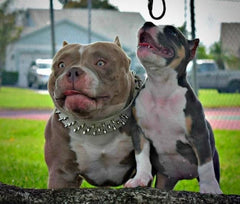


Buying a Pocket Bully should never begin with coat color, price, social-media popularity or the first available puppy that appears in your feed. It should begin with verification.
The breeder influences far more than a puppy’s appearance. The breeder selects the parents, plans the pairing, manages the litter’s earliest development, establishes the paperwork and deposit process, and helps shape the expectations a buyer carries into ownership.
That makes choosing a breeder one of the most important decisions a future Pocket Bully owner will make.
This BULLY KING Magazine feature expands on the original Venomline Pocket Bully Breeder Verification Guide . Readers looking for Venomline’s complete program scorecard, transaction checklist and buyer framework should consult the original resource.
How Do You Choose a Reputable Pocket Bully Breeder?
Choose a Pocket Bully breeder by evaluating the program’s transparency, breeding purpose, parent dogs, pedigree knowledge, temperament selection, health awareness, puppy-raising process, written contract, payment consistency and post-sale support. A reputable breeder becomes more informative when you ask detailed questions. A questionable seller often becomes evasive, defensive or increasingly focused on securing a deposit.
What Is a Pocket Bully Breeder?
A Pocket Bully breeder intentionally produces American Bullies within the Pocket class while selecting for recognizable breed type, balanced structure, stable temperament and predictable family traits.
That definition matters because the term “Pocket Bully” is often used as a marketing label for nearly any short or compact bully-type dog. A legitimate breeder should understand the class, know how height is measured and be able to explain the difference between compact structure and unhealthy exaggeration.

A true breeder is also more than someone who owns two dogs and produces puppies. A breeder should be able to explain:
- The purpose behind the pairing
- The strengths and limitations of the parents
- The qualities the breeder wants to preserve
- The traits the breeder hopes to improve
- The expected temperament direction
- The likely variation within the litter
- The type of home suited to each puppy
Why Choosing the Right Breeder Matters
The breeder makes important decisions long before the puppy enters the buyer’s home. Those decisions influence structure, movement, temperament, confidence, early social development, health risk, paperwork clarity and long-term support.

Many buyers compare puppies as though they were shopping for a product. They compare price, color, distance and photographs. That approach leaves out the most important factor: the breeding program behind the puppy.
| Breeder Decision | What It Influences | Why Buyers Should Care |
|---|---|---|
| Parent selection | Structure, size, temperament and predictability | Better pairings reduce costly surprises |
| Health awareness | Risk reduction and early management | Helps buyers understand realistic breed concerns |
| Puppy development | Confidence, handling and adaptability | Creates a stronger behavioral foundation |
| Buyer education | Ownership preparation and expectations | Improves long-term placement success |
| Written process | Deposits, registration, pickup and support | Reduces misunderstandings and disputes |
For additional information about personality and household fit, read Venomline’s American Bully temperament guide .
What Defines a High-Quality Pocket Bully Breeder?
Consistent Production
Look for repeatable quality across multiple litters, pairings and generations—not a single impressive dog or photograph.
Clear Breeding Logic
Every pairing should have a defined purpose involving breed type, structure, temperament, movement or consistency.
Transparent Communication
Parent ownership, registration, deposits, pickup and health information should be explained clearly and consistently.
Buyer Education
Better breeders help buyers understand development, care, training, structure and realistic ownership expectations.
Consistent Production
One impressive dog does not automatically prove the strength of an entire program. More meaningful evidence includes mature offspring, multiple litters, repeatable breed type, stable temperament, balanced structure and long-term owner feedback.
Clear Breeding Logic
Every planned breeding should have a purpose. That purpose may be preserving breed type, improving movement, strengthening the rear, correcting proportions, maintaining temperament or combining complementary traits.
Generic answers such as “they are both great dogs” do not explain why two animals were selected for one another.
Signs of a Responsible Pocket Bully Breeder

The Breeder Can Explain the Parents
Ask about the sire and dam. A knowledgeable breeder should be able to discuss their temperaments, structure, movement, strengths, limitations, pedigrees and production history.
The answer should go beyond famous names buried deep in the pedigree. The actual parents and closest generations are more relevant to the litter in front of you.
The Breeder Discusses Temperament
Temperament affects how the dog handles new people, children, other animals, training, grooming, veterinary care, travel and unfamiliar environments. A breeder should observe individual puppies and help buyers understand which puppy may fit their home.
The Breeder Demonstrates Health Awareness
Responsible health practices involve more than saying that the parents are “healthy.” A meaningful conversation may include family patterns, mobility, conditioning, weight management, skin concerns, breathing, veterinary care, vaccination and deworming.
Buyers can learn more through Venomline’s Pocket Bully health and lifespan guide .
The Breeder Has a Puppy-Raising Process
Ask how puppies are handled and prepared before placement. Important topics include cleanliness, feeding, grooming exposure, nail care, household activity, unfamiliar sounds, new surfaces, crate introduction and veterinary preparation.

The Breeder Uses Written Terms
Verbal promises are difficult to prove. Deposit amounts, refund terms, payment schedules, pickup deadlines, registration, health provisions and buyer responsibilities should be documented in writing.
Pocket Bully Breeder Red Flags
Some warning signs are obvious. Others appear only after the buyer asks detailed questions.
Major Warning Signs
- The seller cannot clearly identify the sire and dam
- The reason for the breeding is vague or avoided
- The buyer is pressured to send a deposit immediately
- The seller refuses to provide a current puppy video
- No written contract is available before payment
- Payment instructions change without a clear explanation
- Ownership of the puppy or litter is inconsistent
- Registration information is confusing or contradictory
- Only edited, cropped or professional images are provided
- Every puppy is promoted as rare, perfect or show quality
Subtle Warning Signs
- The breeder becomes defensive when asked for proof
- Famous bloodline names replace discussion of the parents
- Color is emphasized above temperament, health and structure
- The breeder cannot explain differences among littermates
- Discounts and countdowns are repeatedly used to create urgency
- Website, social-media and private-message claims do not match
- The buyer is expected to provide trust without receiving proof
How to Verify a Pocket Bully Breeder Before Paying
Confirm the Breeder’s Identity
The seller’s identity should align across the contract, invoice, payment account, website, registration information and direct communication.
Verify the Puppy
Request a current, unedited video. For stronger verification, ask the seller to include the date, your name or a specific agreed phrase.
Confirm Litter Ownership
Ask who owns the sire, dam, litter and registration paperwork. Co-ownership and outside-stud breedings are common, but the arrangement should be clearly explained.
Review the Parent Dogs
Request registered names, current images and an explanation of what each parent contributes to the pairing.
Read the Contract Before Payment
Review refund language, pickup dates, delivery, registration, health terms, breeding rights and ownership-transfer provisions.
Verify Payment Consistency
The payment recipient should match the transaction documents or be clearly identified as an authorized recipient.
Preserve the Transaction Record
Save the listing, photos, videos, messages, invoice, contract, payment confirmation and delivery information.
How to Evaluate a Pocket Bully Pedigree

A pedigree can provide useful information, but it should not replace evaluation of the actual dogs. Recognizable names may suggest general line influence. They do not prove that the current puppy inherited every desirable trait associated with those dogs.
| Pedigree Element | What It May Show | What It Cannot Prove Alone |
|---|---|---|
| Recognizable names | Possible line direction and historical influence | That the current puppy is automatically high quality |
| Close generations | The most relevant recent family information | That every puppy will mature identically |
| Repeated combinations | Potential consistency in type or traits | Perfect predictability or zero variation |
| Breeder interpretation | Whether the pairing was planned intelligently | Results without actual dogs and production proof |
Color may matter to individual buyers, but it should not outrank temperament, structure, health awareness or breeder quality. For more context, review Venomline’s American Bully coat color and genetics guide .
Responsible Breeder vs. High-Risk Breeder
| Evaluation Area | Responsible Breeder | High-Risk Breeder or Seller |
|---|---|---|
| Breeding purpose | Defined goals for type, structure and temperament | Breeding primarily because puppies may sell |
| Parent selection | Explains strengths, limitations and pairing logic | Uses vague claims or avoids details |
| Temperament | Selects for stability and observes puppies | Gives temperament little attention |
| Health awareness | Discusses risks, family patterns and management | Relies on generic “healthy dogs” claims |
| Buyer process | Organized, educational and documented | Fast, unclear and pressure-driven |
| Contract | Available and explained before payment | Missing, incomplete or provided afterward |
| Support | Remains available after pickup | Often disappears after payment |
Are Cheap Pocket Bully Puppies a Bad Sign?
A lower price does not automatically mean that a puppy is poorly bred. However, an unusually low price should lead to more questions—not fewer.
Buyers should determine whether the price includes registration, veterinary records, early care, a written contract, parent verification, breeder support and documented ownership.
Low Price Up Front
An unusually low price can create urgency and make buyers feel they have found a rare opportunity.
Hidden Cost Later
Medical, behavioral, structural, transportation or paperwork problems may become the real expense.
Venomline’s Pocket Bully price guide explains the factors that can influence pricing and why buyers should compare total value rather than price alone.
Questions to Ask Before Buying a Pocket Bully
- Why was this breeding planned?
- What are the strengths of the sire and dam?
- What limitations were considered in the pairing?
- What temperament do you expect from the litter?
- How are the puppies raised before placement?
- What veterinary and registration records are included?
- What exactly does the deposit reserve?
- Is the deposit refundable or transferable?
- How are puppies matched with buyers?
- What support is available after pickup?
- What should the buyer realistically expect at maturity?
Should You Only Search for Breeders Near You?
Location matters for convenience and transportation. It does not prove quality.
A nearby breeder may be easy to visit but weak in transparency, structure knowledge or buyer support. A breeder farther away may provide stronger documentation, a more organized process and more useful guidance.
For location-based research, review Venomline’s state-by-state Pocket Bully breeder and puppy guide .
How to Choose the Right Pocket Bully Puppy

Identifying a reputable breeder is only the first step. The next step is selecting a puppy suited to the buyer’s goals, experience and household.
Prioritize
Temperament fit, confidence, adaptability, balanced development, breeder observations and lifestyle compatibility.
Do Not Overprioritize
Color, “rare” labels, temporary puppy size, social-media attention or promises of guaranteed show quality.
Pocket Bully Breeder Scorecard
Score each category from one to five. Repeated low scores suggest that the buyer should continue researching.
| Category | Question to Ask |
|---|---|
| Breeding purpose | Can the breeder clearly explain why the litter was produced? |
| Parent evaluation | Can the breeder explain both strengths and limitations? |
| Temperament | Does the breeder discuss personality and home fit? |
| Health awareness | Are the answers realistic, specific and process-based? |
| Pedigree knowledge | Can the breeder explain close generations and production? |
| Puppy development | Is there a defined process for care and exposure? |
| Communication | Are detailed questions welcomed and answered clearly? |
| Documentation | Are the contract and payment terms clear? |
| Transaction safety | Do identity, ownership and payment details remain consistent? |
| Support | Will the breeder remain available after pickup? |
Final Buyer-Protection Checklist
- Identify the breeder or authorized seller
- Verify the puppy through a current video
- Confirm ownership of the litter
- Review the sire and dam
- Ask why the breeding was planned
- Discuss expected temperament
- Review available health information
- Read the complete contract
- Confirm registration details
- Clarify deposit and refund terms
- Confirm pickup or delivery arrangements
- Match the payment recipient to the agreement
- Save messages, documents and payment records
- Resolve contradictions before sending money
Frequently Asked Questions
How do I find a legitimate Pocket Bully breeder?
Look for transparent parent information, defined breeding goals, realistic health discussions, temperament selection, written contracts, current puppy verification and consistent communication.
Should a breeder provide a contract before a deposit?
Buyers should be able to review the applicable deposit, refund, pickup, registration and health terms before sending payment.
Is registration proof of breeder quality?
No. Registration may document identity and pedigree, but it does not independently prove health, temperament, structure, breeder ethics or long-term support.
Should I choose a breeder based on followers?
No. Social reach proves marketing visibility, not breeding knowledge or program quality. Verify the dogs, ownership, documents, production and buyer process.
Are cheap Pocket Bully puppies always poorly bred?
Not always. However, a significantly lower price should prompt careful verification of the puppy, parents, documentation, veterinary care and breeder support.
How can I verify a puppy before paying?
Request a current video, confirm the seller’s identity and litter ownership, review the contract, verify the parents and ensure the payment recipient matches the written agreement.
Slow the Process Down
Learn the breed. Verify the breeder. Review the parents. Read the contract. Confirm the transaction. Choose the puppy based on long-term fit rather than short-term excitement.
Quality breeders do not need buyers to remain uninformed. Strong programs become easier—not harder—to recognize when buyers ask informed questions.
Read Venomline’s Complete Original Guide