
Control fleas, check ears and skin, document the pattern, then involve your veterinarian before making repeated diet changes.
American Bully Allergies Guide: Itching, Food Allergies, Skin Problems, Ear Infections & Paw Licking
American Bully allergies are one of the most common reasons owners deal with itching, paw licking, ear infections, red skin, bumps, hot spots, soft stool, hair loss, and constant discomfort. The hard part is that food allergies, environmental allergies, flea allergies, yeast, bacteria, parasites, and skin irritation can all look similar from the outside.
That is why guessing is expensive.
And usually wrong.
The best way to handle American Bully allergies is not to randomly switch foods every week, dump supplements into the bowl, blame chicken for everything, or treat every itch like a food allergy. The best approach is to slow down, identify the pattern, rule out the obvious problems, simplify the dog’s environment and diet, and work with a veterinarian when symptoms are severe, chronic, or recurring.
American Bullies, Pocket Bullies, and bully breed dogs are often powerful, compact, muscular dogs with short coats and visible skin. When the skin is inflamed, irritated, dry, infected, or itchy, it shows fast. A small skin issue can turn into constant licking, chewing, odor, redness, ear problems, and secondary infection if it is not handled correctly.
This guide breaks down the most common allergy problems in American Bullies, how to tell the difference between food allergies and environmental allergies, what causes paw licking and ear infections, what to feed allergy-prone Bullies, what supplements may help, and when it is time to stop guessing and get veterinary help.
Quick Answer: Why Is My American Bully So Itchy?
The most common reasons an American Bully is itchy include environmental allergies, flea allergy dermatitis, food sensitivity or food allergy, yeast or bacterial skin infection, ear infection, parasites, dry skin, poor diet, over-bathing, or contact irritation from grass, pollen, cleaners, bedding, or shampoos.
Dog allergy symptoms often overlap. The American Kennel Club explains that skin allergies, food allergies, and environmental allergens can all create similar signs, which makes diagnosis challenging without veterinary guidance.
If your American Bully is constantly scratching, licking paws, chewing feet, rubbing the face, shaking the head, developing red skin, losing hair, smelling yeasty, or getting repeated ear infections, do not assume it is automatically the food. Food can be involved, but environmental triggers, fleas, yeast, bacteria, and other skin diseases can create the same symptoms.
The smartest first move is to document the symptoms, check for fleas, look at the ears and paws, review recent food or environment changes, simplify the routine, and contact your veterinarian if symptoms are persistent, severe, spreading, infected, or painful.
BULLY KING’s Evidence-First Approach to American Bully Allergies
At BULLY KING Magazine, we approach allergy problems with the same standard we use when covering nutrition, structure, and breeding: identify the likely cause, separate evidence from hype, and avoid shortcuts that create more problems than they solve.
A healthy American Bully should have:
- clean skin
- healthy coat
- clear ears
- stable digestion
- normal stool
- controlled itching
- clean paws
- good recovery
- healthy weight
- strong immune support
That does not mean a dog will never itch, never lick, or never have a flare-up. Dogs are living animals. They touch grass, inhale pollen, roll on things they should not, react to insects, get wet, get dirty, and occasionally act like their entire life’s purpose is to find the one thing they are allergic to and dive into it face first.
But chronic itching is not normal.
Repeated ear infections are not normal.
Constant paw chewing is not normal.
Open sores, odor, hair loss, thickened skin, or bleeding from scratching are not “just a bully thing.”
That is a problem that needs a system.
For American Bullies, the best allergy strategy is:
- Control fleas and parasites.
- Rule out infection.
- Identify the itch pattern.
- Stabilize the diet.
- Simplify ingredients.
- Support skin and gut health.
- Manage the environment.
- Work with a vet when symptoms are chronic or severe.
The mistake is trying step eight last after months of guessing. By that point, the dog is miserable, the owner has bought six bags of food, and everyone involved needs a nap.
Important Health Disclaimer
This guide is for educational purposes only. It is not a diagnosis and does not replace veterinary care. Allergies, skin infections, ear infections, parasites, autoimmune conditions, endocrine disease, and other medical problems can look similar.
If your American Bully has severe itching, bleeding skin, open sores, repeated ear infections, head shaking, hair loss, vomiting, diarrhea, weight loss, lethargy, or symptoms that do not improve, contact your veterinarian promptly. Hives, facial swelling, collapse, repeated vomiting, or trouble breathing can indicate a medical emergency and require immediate veterinary care.
Allergy management works best when it is based on the dog’s actual condition, not internet guessing.
Common American Bully Allergy Symptoms
American Bully allergy symptoms commonly show up through the skin, ears, paws, coat, and digestion.
Common signs include:
- itching
- scratching
- paw licking
- foot chewing
- red paws
- face rubbing
- ear shaking
- ear odor
- recurring ear infections
- red belly
- armpit irritation
- groin irritation
- hot spots
- bumps or rashes
- flaky skin
- dandruff
- hair thinning
- hair loss
- greasy coat
- yeasty smell
- watery eyes
- soft stool
- gas
- vomiting
- diarrhea
Cornell’s canine allergy resource notes that dogs with allergies may show uncomfortable symptoms such as itching, rashes, and gastrointestinal distress, and that diagnosing and treating allergic disease can be challenging.
That overlap is exactly why a structured approach matters.
A dog with itchy paws could have environmental allergies. Or yeast. Or fleas. Or food sensitivity. Or contact irritation. Or mites. Or more than one issue at the same time.
The dog does not care which category the internet picked. The dog just wants relief.
Types of Allergies in American Bullies
American Bullies can deal with several different allergy patterns.
The major categories are:
- Environmental allergies
- Food allergies or food sensitivities
- Flea allergy dermatitis
- Contact allergies or irritants
- Seasonal allergies
- Secondary yeast or bacterial infections
Many dogs have more than one factor involved. A dog may have environmental allergies, then lick the paws until yeast overgrows, then develop a secondary infection, then seem “allergic to everything.” In reality, the original trigger and the secondary problem both need attention.
Environmental Allergies in American Bullies
Environmental allergies are one of the most common causes of itching in dogs. These allergies can involve pollen, grass, dust mites, mold, weeds, trees, household dust, and other environmental triggers.
Merck Veterinary Manual describes canine atopic dermatitis as a genetically predisposed chronic inflammatory and itchy allergic skin disease, diagnosed through history, clinical signs, and exclusion of other causes of itching.
Environmental allergies often show up as:
- paw licking
- belly redness
- armpit irritation
- groin irritation
- ear infections
- face rubbing
- seasonal flares
- itching after being outside
- worsening during pollen seasons
- recurrent skin infections
Unlike humans, dogs often show allergies through skin symptoms rather than sneezing. That is why a dog with environmental allergies may chew paws, scratch ears, rub the face, or develop skin infections instead of just having watery eyes.
Common Environmental Triggers
Common triggers include:
- grass
- pollen
- dust mites
- mold
- weeds
- trees
- household cleaners
- laundry detergent
- shampoos
- yard chemicals
- bedding
- carpet
- humidity
- standing moisture
- outdoor allergens carried on paws and coat
For American Bullies in warm, humid climates, environmental management matters. Moisture, heat, grass, pollen, and yeast-friendly conditions can all stack together.
Food Allergies in American Bullies
Food allergies in dogs are real, but they are often overdiagnosed by owners. Many people blame food first because it feels controllable. You can buy a new bag of food today. You cannot remove pollen from the state of Florida without becoming a cartoon villain.
Food allergies can cause:
- itching
- ear problems
- paw licking
- skin redness
- digestive upset
- vomiting
- diarrhea
- gas
- chronic soft stool
- recurrent skin issues
But food allergies are not the only cause of those symptoms.
Food allergy diagnosis usually requires a strict elimination diet trial under veterinary guidance, followed by a controlled re-challenge if symptoms improve. Blood, saliva, hair, and skin tests are not considered reliable stand-alone methods for proving a food allergy.
A veterinary elimination trial may use a truly novel-protein diet or a hydrolyzed prescription diet and may continue for up to three months. During that period, the dog must receive only the approved trial diet and permitted treats. Flavored medications, toothpaste, chews, table scraps, toppers, and another pet’s food can invalidate the trial.
Randomly switching from chicken to beef to salmon to lamb to duck to “ancient mountain buffalo with sweet potato” every two weeks is not a real food trial. It is chaos with a receipt.
Common Food Triggers
Common proteins or ingredients owners suspect include:
- chicken
- beef
- dairy
- eggs
- wheat
- soy
- corn
- lamb
- fish
- grains
- preservatives
- treats
- flavored chews
- toppers
But the trigger depends on the dog. There is no universal “bad ingredient” for every American Bully.
Some dogs do great on chicken.
Some do not.
Some dogs tolerate grains.
Some do not.
Some dogs do better on limited ingredient diets.
Some need veterinary therapeutic diets.
The point is not to demonize one ingredient. The point is to identify what your dog actually tolerates.
Chicken Allergy in American Bullies
“Is my American Bully allergic to chicken?” is one of the most common owner questions.
The answer: maybe, but do not assume.
Chicken is common in dog food, treats, chews, toppers, and flavored supplements. Because dogs are exposed to it often, owners frequently suspect it when itching starts. But chicken is not automatically bad for American Bullies.
Signs that may make chicken worth investigating include:
- itching that continues on chicken-based food
- ear problems that flare with chicken-based diets
- soft stool on chicken formulas
- improvement during a strict elimination diet
- symptoms returning after chicken reintroduction
The key phrase is strict elimination diet.
If the dog is eating “salmon kibble” but still getting chicken-flavored treats, chicken-based chews, table scraps, flavored medication, or poultry fat in other products, you have not removed chicken.
That is why food trials need discipline.
Flea Allergy Dermatitis
Flea allergy dermatitis is a major cause of itching in dogs. A dog does not need to be covered in fleas to react. Some dogs are highly sensitive to flea bites and may itch intensely from limited exposure.
Cornell’s allergy guidance notes that veterinarians often evaluate itchy dogs for fleas, mange, rashes, and skin infections, and flea prevention may be recommended if it is not already being used.
Signs that fleas may be involved include:
- itching near tail base
- chewing the back end
- scabs
- small red bumps
- sudden itching
- seasonal worsening
- other pets itching
- visible flea dirt
- no consistent flea prevention
Even if you do not see fleas, they can still be part of the problem. Flea control should be one of the first boxes checked in any itchy dog.
Paw Licking in American Bullies
Paw licking is one of the most common allergy complaints in American Bullies.
Possible causes include:
- environmental allergies
- grass contact
- pollen
- yeast
- bacteria
- food sensitivity
- fleas
- mites
- anxiety
- injury
- foreign object
- nail or pad irritation
- moisture trapped between toes
The paws touch everything: grass, chemicals, pollen, dirt, concrete, cleaning residue, moisture, and allergens. For a dog with environmental allergies, paws are a common flare zone.
Red Paws and Brown Staining
If your American Bully’s paws are red, irritated, swollen, or stained brown from licking, the dog may have inflammation, yeast, bacteria, or allergy-related irritation.
Constant licking makes the problem worse. Moisture from saliva can contribute to yeast and bacterial overgrowth. Then the paws itch more. Then the dog licks more. That cycle needs to be broken.
Helpful management steps may include:
- wiping paws after outdoor time
- keeping paws dry
- checking between toes
- using vet-recommended wipes
- controlling fleas
- addressing yeast or infection
- managing environmental allergies
- reviewing diet if symptoms suggest food involvement
If paws smell yeasty, are swollen, painful, bleeding, or the dog is limping, that is a vet situation.
Ear Infections in American Bullies
Recurring ear infections are a major allergy clue.
Dogs with allergies often develop inflamed ears, and inflamed ears can become a perfect environment for yeast and bacteria.
Signs include:
- head shaking
- scratching ears
- redness
- odor
- dark discharge
- waxy buildup
- pain when touched
- rubbing ears on furniture
- repeated infections
Ear problems should not be ignored. Chronic ear infections can become painful and harder to treat over time.
Do not just keep cleaning infected ears and hoping. Cleaning can help maintenance, but infection usually needs diagnosis and appropriate treatment.
Yeast Problems in American Bullies
Yeast is often part of the allergy conversation because irritated skin and ears can allow yeast to overgrow.
Signs that yeast may be involved include:
- musty odor
- greasy skin
- brown debris in ears
- red paws
- licking
- thickened skin
- darkened skin
- recurrent ear problems
- irritation in skin folds or warm areas
Yeast is not always the root cause. It may be secondary to allergies, moisture, inflammation, or immune issues. That is why killing yeast without addressing the trigger can lead to repeated flare-ups.
Skin Bumps, Rashes, and Hot Spots
American Bullies can develop bumps, rashes, and hot spots from allergies, infection, insect bites, irritation, grooming products, or trauma from scratching.
Common signs include:
- raised bumps
- red rash
- scabs
- raw spots
- hair loss
- wet irritated patches
- crusting
- odor
- painful skin
- spreading irritation
Hot spots can worsen quickly. A small irritated patch can become a large, painful, infected area if the dog keeps licking or scratching.
If the area is open, spreading, painful, smelly, or wet, involve your veterinarian.
Food Allergy vs Environmental Allergy: How to Tell the Difference
Food and environmental allergies can look similar, but patterns may help.
| Pattern | More Suggestive Of |
|---|---|
| Itching all year with no seasonal change | Food allergy or chronic environmental exposure |
| Itching worse in spring/fall | Environmental allergy |
| Paw licking after grass exposure | Environmental/contact allergy |
| Recurrent ear infections | Food or environmental allergy |
| Digestive upset plus itching | Food sensitivity may be involved |
| Tail-base itching | Fleas should be ruled out |
| Symptoms improve on strict elimination diet | Food allergy more likely |
| Symptoms improve with environmental control | Environmental trigger more likely |
This table is not a diagnosis. It is a starting point.
Many dogs have mixed disease. A dog can have environmental allergies and food sensitivity. Or fleas and yeast. Or allergies plus infection.
Welcome to dermatology: apparently every symptom decided to wear the same outfit.
American Bully Allergy Decision Tree
Use this practical decision tree before making random changes.
| If Your American Bully Has... | Start Here | Next Step |
|---|---|---|
| Constant itching | Check fleas, skin, ears, food history, and environment | Vet exam if persistent |
| Paw licking | Wipe paws, check redness/odor, reduce grass/pollen exposure | Rule out yeast or infection |
| Ear infections | Do not guess; ears need proper diagnosis | Vet ear cytology/treatment |
| Soft stool and itching | Stabilize diet and remove extra treats/toppers | Discuss food trial with vet |
| Seasonal flares | Environmental allergy may be likely | Manage pollen, baths, paws, bedding |
| Hot spots or open sores | Stop the lick/scratch cycle | Vet care recommended |
| Yeasty smell | Check ears, paws, folds, belly | Treat infection and root cause |
| Suspected food allergy | Strict elimination diet trial | No treats/flavored extras during trial |
What a Veterinarian May Check First
A productive allergy appointment is usually less about one dramatic test and more about ruling problems in or out in the right order.
Depending on the symptoms, a veterinarian may use:
- a complete skin and ear examination
- flea-comb findings and parasite history
- skin cytology to look for yeast or bacteria
- ear cytology when odor, discharge, redness, or head shaking is present
- skin scraping or other testing for mites
- fungal testing when ringworm or another fungal disease is suspected
- review of flea prevention, bathing, diet, treats, medications, and seasonal patterns
- a strict elimination diet followed by dietary challenge
- referral to a veterinary dermatologist for difficult or recurring cases
- environmental allergy testing when allergen-specific immunotherapy is being considered
Environmental allergy testing does not diagnose every itchy dog by itself. It is generally used after the clinical picture supports atopic dermatitis and the veterinarian is developing allergen-specific immunotherapy. Food allergy is confirmed through diet elimination and re-challenge—not by buying a broad online sensitivity panel.
Build an Allergy Flare Log
Before the appointment, track:
- date and severity of itching
- body areas affected
- ear odor or discharge
- paw redness or staining
- stool quality
- vomiting or gas
- current food and every extra item consumed
- flea prevention product and last dose
- baths, shampoos, wipes, and cleaners
- weather, pollen, grass, travel, boarding, or grooming exposure
- photos of skin, paws, ears, and hot spots
A simple log turns “he has been itchy for a while” into information your veterinarian can use.
Best Food for American Bullies With Allergies
The best food for an American Bully with allergies is the food the dog can digest, tolerate, and maintain healthy skin on consistently.
That may be:
- limited ingredient diet
- single-protein diet
- novel protein diet
- hydrolyzed veterinary diet
- sensitive skin and stomach formula
- balanced home-prepared diet under veterinary nutrition guidance
For many owners, a limited ingredient diet is the first practical step. But severe or chronic allergy cases may need a veterinary therapeutic diet.
What to Look For
Look for:
- clear protein source
- limited unnecessary ingredients
- digestible carbohydrates
- no excessive fat
- complete and balanced formula
- consistent sourcing
- no random flavor blends
- minimal treats and toppers
- good stool quality
- improved skin over time
What to Avoid
Avoid:
- switching foods every week
- feeding five protein sources at once
- adding multiple toppers
- using random treats during food trials
- assuming grain-free is automatically better
- assuming raw is automatically better
- ignoring fleas and environment
- relying on marketing claims like “hypoallergenic” without a real plan
Limited Ingredient Diets for American Bullies
A limited ingredient diet can help reduce variables. It does not automatically cure allergies, but it can make troubleshooting easier.
A simple diet may include:
- one main animal protein
- one main carbohydrate source
- limited extras
- no random treats
- no flavored chews
- no table scraps
- no supplement overload
The goal is to reduce noise.
If you are trying to figure out what your dog reacts to, the worst thing you can do is feed a complicated bowl with kibble, chicken, beef topper, salmon oil, goat’s milk, pumpkin, liver powder, treats, and three different chews.
That is not an elimination plan.
That is a buffet with legal liability.
Raw Diets and Allergies
Some owners believe raw feeding automatically fixes allergies. It does not.
A raw diet may help some dogs if it removes a trigger and is properly balanced. But raw can also create problems if it is unbalanced, too fatty, contaminated, inconsistent, or poorly handled.
The FDA notes that raw pet food diets can be dangerous to both pets and people, especially due to harmful bacteria risks.
If you feed raw, it should be balanced, safely sourced, safely stored, and appropriate for the dog. Raw is not automatically superior. Kibble is not automatically inferior. The dog’s health, tolerance, stool, coat, and body condition matter more than ideology.
Supplements for American Bully Allergies
Supplements can support allergy-prone American Bullies, but they are not cures.
Common options include:
- omega-3 fish oil
- probiotics
- skin barrier support products
- vitamin E when recommended
- digestive support
- limited ingredient toppers
- goat’s milk if tolerated
- vet-recommended allergy support products
Omega-3 fish oil is often used for skin, coat, and inflammatory support. Probiotics may help support gut balance, especially during food transitions or digestive instability.
But supplements will not fix:
- fleas
- untreated yeast
- bacterial infection
- severe food allergy
- environmental exposure
- ear infection
- parasites
- poor diet
- constant overfeeding
- inappropriate grooming products
Supplements are support tools, not magic.
Best Grooming Routine for Allergy-Prone American Bullies
Grooming matters for allergy-prone dogs.
Helpful steps may include:
- regular baths with appropriate shampoo
- wiping paws after outdoor time
- drying paws and folds
- washing bedding
- avoiding harsh fragrances
- using vet-recommended medicated shampoos when needed
- keeping ears clean but not over-cleaned
- brushing out loose hair
- avoiding irritating sprays or colognes
The goal is to reduce allergens and skin irritation without stripping the skin.
Over-bathing with harsh products can make dry skin worse. Under-bathing a dog with environmental allergies can leave allergens sitting on the coat and skin.
The right schedule depends on the dog.
Curaseb Chlorhexidine Shampoo for American Bully Skin Problems
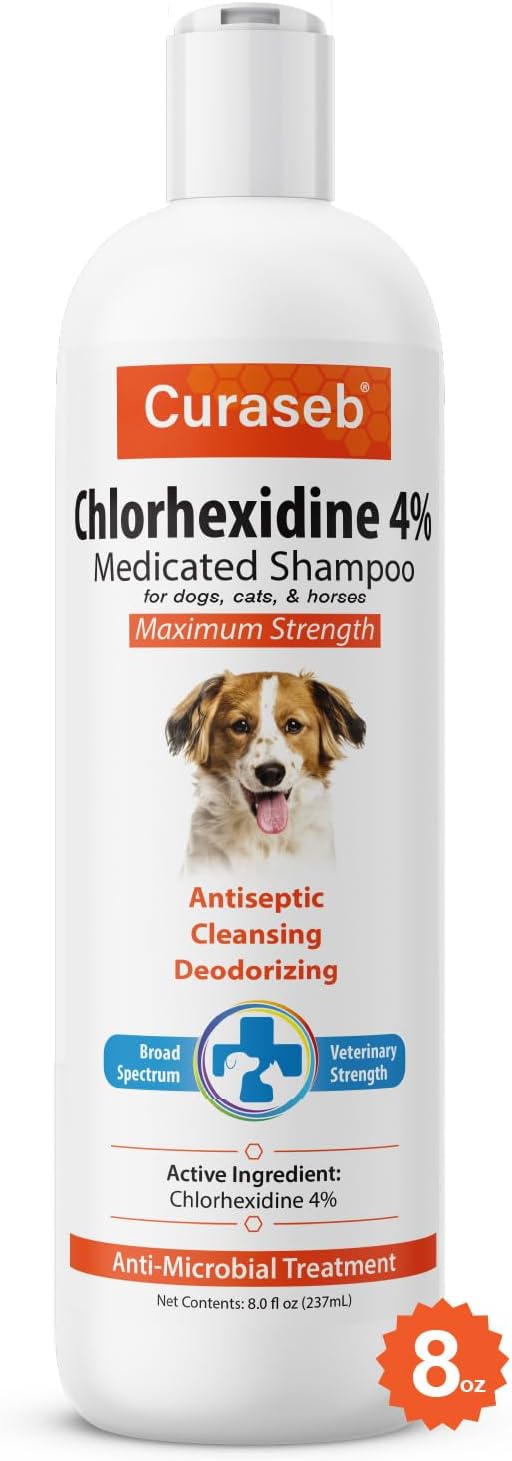
When an American Bully has a confirmed or suspected bacterial or yeast-related skin problem, a veterinarian may recommend an antimicrobial shampoo as one part of the treatment plan. One commonly used over-the-counter option is Curaseb 4% Chlorhexidine Medicated Shampoo for dogs and cats.
Medicated Skin-Care Option
Curaseb 4% Chlorhexidine Medicated Shampoo
Curaseb is marketed as a maximum-strength antimicrobial shampoo containing 4% chlorhexidine. Products in this category may be used as part of a veterinarian-directed plan for certain superficial bacterial or yeast-related skin problems, greasy skin, odor, and recurring microbial overgrowth.
Best suited for: dogs whose veterinarian has identified or strongly suspects a microbial skin problem. Chlorhexidine shampoo does not diagnose or cure the underlying allergy, and it should not replace flea control, parasite testing, ear cytology, a food trial, or treatment of the primary trigger.
Use carefully: Follow the label and your veterinarian’s directions for bathing frequency, contact time, rinsing, and eye or ear precautions. Keep it out of the eyes and mouth. Do not place shampoo inside the ear canal unless a veterinarian specifically instructs you to do so. Stop use and contact your veterinarian if redness, swelling, pain, or irritation becomes worse.
View Curaseb Shampoo on AmazonProduct link provided for convenience. Confirm the current size, ingredients, directions, price, and seller before ordering.
Home and Environmental Management
Environmental control can make a major difference for allergy-prone American Bullies.
Try:
- washing bedding weekly
- vacuuming frequently
- wiping paws after walks
- avoiding freshly treated grass
- reducing dust exposure
- using unscented laundry detergent
- rinsing after heavy pollen exposure
- keeping the dog dry after baths or rain
- managing humidity
- using flea prevention consistently
- avoiding harsh cleaning chemicals around the dog
If allergies worsen after outdoor time, the paws, belly, and coat may be carrying allergens inside.
When to See a Veterinarian
See a veterinarian if your American Bully has:
- severe itching
- open sores
- bleeding skin
- hair loss
- hot spots
- head shaking
- ear odor
- ear discharge
- repeated ear infections
- swollen paws
- limping
- bad odor
- thickened skin
- darkened skin
- vomiting
- diarrhea
- weight loss
- lethargy
- symptoms lasting more than a few days
- symptoms that keep returning
Veterinarians can check for fleas, mites, yeast, bacteria, ear infections, food allergy patterns, atopic dermatitis, and other conditions. Merck notes that diagnosing canine atopic dermatitis is challenging and involves history, clinical signs, and exclusion of other itchy skin diseases.
That is why a professional exam matters.
Common Allergy Treatments to Discuss With Your Vet
Treatment depends on the cause. Options may include:
- flea prevention
- medicated shampoo
- ear medication
- antibiotics for bacterial infection
- antifungals for yeast
- anti-itch medication
- allergy medication
- elimination diet trial
- hydrolyzed diet
- novel protein diet
- immunotherapy
- topical wipes
- parasite treatment
- skin testing or referral to dermatologist
AAHA’s dog allergy resource explains that allergy testing and treatment can vary based on whether the cause is food, flea, or environmental allergy.
The right treatment plan depends on diagnosis. Treating allergies without identifying infection, fleas, or parasites can lead to frustration and repeated flare-ups.
Mistakes American Bully Owners Make With Allergies
The biggest allergy mistakes include:
- blaming food immediately
- switching foods too often
- ignoring fleas
- ignoring ears
- using random shampoos
- overusing supplements
- feeding too many treats during food trials
- assuming grain-free fixes everything
- assuming raw fixes everything
- waiting too long to see a vet
- stopping treatment too early
- not treating secondary yeast or bacteria
- not washing bedding
- not wiping paws
- letting the dog get overweight
Overweight dogs often have more skin folds, more inflammation stress, more mobility problems, and more discomfort. Weight control is part of allergy management, even when food is not the original trigger.
American Bully Allergy Myths
Myth: All American Bully allergies are from chicken.
False. Chicken can be a trigger for some dogs, but environmental allergies, fleas, yeast, bacteria, and other proteins can also be involved.
Myth: Grain-free food fixes allergies.
False. Some dogs do better without certain grains, but grain-free is not automatically better and does not guarantee allergy relief.
Myth: Raw feeding cures allergies.
False. Raw may help some dogs when properly balanced and when it removes a trigger, but it can also be risky or unbalanced if done incorrectly.
Myth: Ear infections are normal for Bullies.
False. Recurring ear infections are not normal. They often suggest underlying allergy, yeast, bacteria, anatomy, moisture, or another medical issue.
Myth: Paw licking is just a habit.
Sometimes it can become behavioral, but chronic paw licking often starts with irritation, allergies, yeast, bacteria, or contact triggers.
Myth: Supplements can replace allergy treatment.
False. Supplements may support skin, coat, digestion, and inflammation balance, but they do not replace diagnosis or veterinary treatment.
Featured Snippet Answer: How Do You Treat American Bully Allergies?
To treat American Bully allergies, start by ruling out fleas, parasites, yeast, bacterial infection, and ear infections. Then identify whether symptoms are seasonal, food-related, environmental, or contact-based. Stabilize the diet, avoid random food switching, wipe paws after outdoor exposure, wash bedding, use flea prevention, and work with your veterinarian on an elimination diet, allergy medication, medicated shampoo, ear treatment, or long-term allergy plan if needed.
Related Venomline Guides
Use this allergy guide as part of the full Venomline health and nutrition cluster:
Use this for the main diet, feeding, nutrition, and body condition system.
American Bully Supplements Guide
Use this for omega-3s, joint support, probiotics, skin support, and supplement safety.
American Bully Diet & Nutrition Guide
Use this for deeper feeding strategy, protein choices, raw vs kibble, and digestive support.
American Bully Feeding Calculator
Use this for portion control and calorie-based adjustments.
Use this for broader health, prevention, ownership, and condition support.
Pocket Bully Health Testing Guide
Use this for breeder-level education around structure, screening, and responsible breeding.
Pocket Bully Growth & Weight Chart
Use this for puppy development, growth-stage feeding, and body condition monitoring.
Explore Venomline Puppies, Stud Service & Upcoming Breedings
Readers ready to move from research to action can use Venomline’s official pages below:
Final Take: American Bully Allergies Need a System, Not Guesswork
American Bully allergies can be frustrating because the symptoms overlap. Food allergies, environmental allergies, flea allergies, yeast, bacteria, parasites, and contact irritation can all cause itching, paw licking, ear infections, red skin, bumps, hair loss, odor, and discomfort.
The worst approach is guessing forever.
The best approach is a system:
- control fleas
- check ears and skin
- rule out infection
- document patterns
- simplify food
- reduce environmental triggers
- support skin and digestion
- use supplements carefully
- work with a veterinarian when symptoms persist
BULLY KING Magazine’s goal is not to chase trends. It is to publish practical breed education that helps owners support American Bullies that are well-fed, healthy, comfortable, and built for long-term quality of life.
An itchy dog is not thriving.
A dog chewing its paws raw is not “just being dramatic.”
Recurring ear infections are not normal.
Allergy-prone American Bullies need discipline, observation, and the right plan. Handle the foundation first, get the dog comfortable, and stop letting random advice turn your dog into a science experiment with paws.
American Bully Allergies FAQ
Are American Bullies prone to allergies?
American Bullies can be prone to allergy-related skin, ear, and paw issues, especially when environmental triggers, food sensitivity, fleas, yeast, bacteria, or poor skin barrier health are involved.
Why does my American Bully keep licking his paws?
Paw licking can be caused by environmental allergies, grass, pollen, yeast, bacteria, food sensitivity, fleas, mites, injury, or contact irritation. If paws are red, swollen, smelly, painful, or stained from licking, a vet exam is recommended.
What food is best for American Bullies with allergies?
The best food is the one your dog tolerates consistently. Some allergy-prone Bullies do better on limited ingredient, novel protein, hydrolyzed, or sensitive skin and stomach formulas. Severe cases may need a veterinary diet trial.
Is chicken bad for American Bullies?
Chicken is not automatically bad for American Bullies. Some dogs tolerate chicken well, while others may react to it. A strict elimination diet is the best way to determine whether chicken is truly a problem.
Why does my American Bully keep getting ear infections?
Recurring ear infections can be linked to allergies, yeast, bacteria, moisture, inflammation, anatomy, or other medical problems. Chronic ear infections should be diagnosed and treated by a veterinarian.
How do I know if my American Bully has food allergies?
Food allergies may cause itching, ear issues, paw licking, vomiting, diarrhea, gas, or soft stool. The best way to evaluate food allergy is usually a strict elimination diet trial under veterinary guidance.
Can environmental allergies cause paw licking?
Yes. Environmental allergens like grass, pollen, dust, mold, and weeds can cause paw licking, red paws, belly irritation, ear issues, and itching, especially after outdoor exposure.
What supplements help American Bully allergies?
Omega-3 fish oil, probiotics, and skin-support supplements may help support allergy-prone American Bullies, but they do not replace veterinary care or treatment for infection, fleas, yeast, or severe allergies.
Should I switch my American Bully to grain-free food for allergies?
Not automatically. Grain-free food does not fix every allergy and is not always necessary. Some dogs tolerate grains well. The better approach is identifying what your specific dog reacts to.
When should I take my American Bully to the vet for allergies?
Take your dog to the vet if itching is severe, skin is bleeding, paws are swollen, ears smell bad, hair is falling out, hot spots appear, symptoms keep returning, or your dog has vomiting, diarrhea, weight loss, or lethargy.
Continue With Venomline’s Full Health & Nutrition System
Pair allergy management with disciplined feeding, body-condition tracking and preventive veterinary care.
Open the Diet HubOpen the Health Guide