How to Become an American Bully Breeder: Read This Before You Start
Thinking about becoming an American Bully breeder? Read this first. Most new breeders underestimate the money, time, risk, ethics, veterinary costs, bloodline research, and responsibility required to build a real program — and most are out of business within a few years.
Most people get into the dog breeding business for one of two reasons: they either want to make money, or they genuinely love the breed. The problem is that passion alone will not save a poorly planned program, and chasing money usually destroys one faster.
Some breeders become successful and improve the American Bully breed. The majority do not. Many damage the breed by making emotional purchases, chasing hype dogs, ignoring health, breeding too young, breeding too close, underestimating veterinary costs, or thinking a famous dog in a pedigree automatically guarantees sales.
This guide is designed to give new breeders a realistic starting point — not the fantasy version sold in comments sections, but the version that includes contracts, cash reserves, health, structure, stud service, bloodline research, socialization, and the uncomfortable truth that most breeders never build a profitable long-term program.
How to Become an American Bully Breeder
Featured Snippet Answer
To become an American Bully breeder, start by studying the breed standard, ABKC classes, bloodlines, health risks, temperament, structure, and responsible breeding ethics. Build your program around quality foundation females, use proven stud service before buying a male, keep cash reserves for veterinary emergencies, use written contracts, socialize every puppy, and breed only when your program improves the breed.
Do American Bully Breeders Make Money?
The short answer: a few do, most do not. A small percentage of breeders build a reputation, produce consistent litters, maintain repeat customers, and create a sustainable business. Most new breeders quit within the first few years.
Many people see dogs like Dax, Miagi, Bullseye, Magoo, Shamrock, or Venom and assume that buying a male stud will make them rich. That is usually the first mistake. A famous dog in the pedigree does not create a program by itself.
A real breeding program requires cash reserves, veterinary relationships, emergency planning, housing, cleaning, food, supplements, registration paperwork, contracts, marketing, customer service, reputation, and time. If you cannot afford an emergency C-section, neonatal care, or a medical issue without panic, you are not ready.
American Bully Breeding for Beginners: Quick Reality Check
Many new breeders leave within the first few years because costs, losses, stress, and slow sales are higher than expected.
Buying a male first is expensive and risky. He may not mature into a worthy stud or produce what you hoped.
Quality foundation females usually give a new program more flexibility than starting with multiple males.
People do not send serious money only because of a pedigree. Trust, proof, consistency, and honesty matter.
First Understand the American Bully Breed
Before breeding American Bullies, you need to understand the breed itself. The American Bully developed in the 1990s and gained major recognition through the American Bully Kennel Club, with the ABKC forming in 2004. The UKC recognized the American Bully in 2013. Other registries exist, but ABKC and UKC are among the most referenced in breed discussions.
The American Bully was selectively bred to give pit bull-type dogs a new direction and outlet. It was developed as a companion breed with impressive physical structure, heavier bone, a more muscular build, and a stable temperament suitable for families.
A correct American Bully should be confident, loyal, people-focused, and stable. When bred correctly, many can still be athletic for their build, but they are not designed to perform like a lean 45-pound American Pit Bull Terrier. This breed carries more muscle, more bone, and a different purpose.
For a deeper modern explanation, read Venomline’s American Bully Guide and American Bully vs Pit Bull history guide.
Know the American Bully Classes Before Breeding
A breeder should understand the American Bully classes before pairing dogs. The ABKC removed the old Extreme class, leaving the core class conversation around Pocket, Standard, Classic, and XL.
| Class | General Description | Breeder Warning |
|---|---|---|
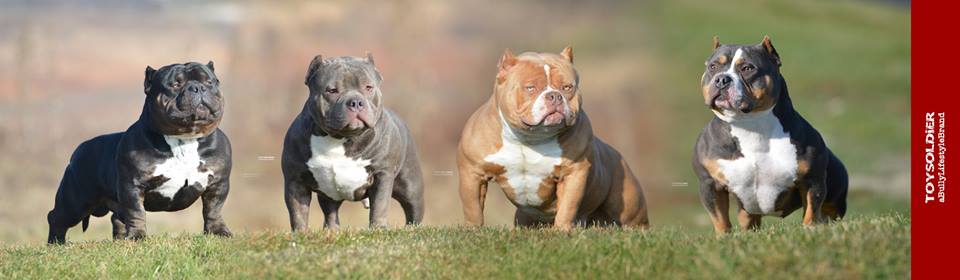
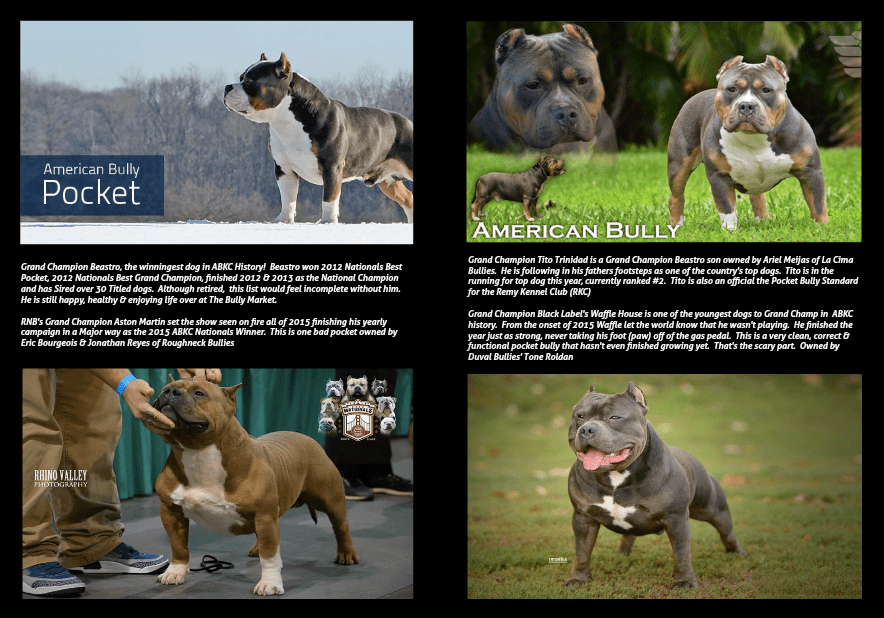
| Pocket Bully | Determined by adult height. Males are under 17 inches and no less than 14 inches at the withers. Females are under 16 inches and no less than 13 inches. | Do not confuse compact with unhealthy. Shorter dogs still need structure, movement, breathing, and balance. |
| Standard Bully | Compact, medium-to-large dog with muscular body, blocky head, heavy bone, and bully breed type. | Mass should not destroy movement or function. |
| Classic Bully | Lighter frame and less overall body mass than Standard while still following the American Bully standard. | Lighter does not mean poor quality; balance and breed type still matter. |
| XL Bully | Taller than Standard while sharing the same general build, body type, and breed type. | XL does not mean XXL. “XXL Bully” is not a real American Bully class. |
For the full class breakdown, use Venomline’s ABKC American Bully Classes & Show Guide. If your goal is Pocket or Micro-style dogs, also read the Pocket Bully Size Guide, Micro Bully Size, Traits & Breed Guide, and Pocket Bully vs Micro Bully comparison.
XXL Bully and Exotic Bully: Understand the Labels
XXL Bully is not a real American Bully classification. Once a dog reaches the XL height range, that is the class. Adding extra Xs is marketing, not breed education.
Exotic Bully is also a term new breeders need to treat carefully. Many “exotic” dogs are overdone American Bullies or bully-type dogs with exaggerated features, heavy bulldog influence, structural issues, breathing problems, poor movement, and shortened lifespans. Some are impressive-looking online but fall apart physically in real life.
If your goal is to become a responsible breeder, do not chase the most extreme version of the breed. Chase the healthiest, most correct, most consistent version of the style you love.
Choosing an American Bully Bloodline
Bloodlines matter, but bloodline names are not magic. New breeders often get caught up in famous names without understanding what those dogs produced, what faults they carried, and how they should be used.
Historically important bloodlines and families in the American Bully world include Gottiline, Razor’s Edge, Remyline, Daxline, Louis V Line, Luckyline, and Venomline. Some newer names are better described as programs or families until enough generations exist to prove consistency.
A responsible breeder studies what a bloodline is known for, what it improves, what it risks, how consistent it is, and whether it fits the female standing in front of them — not just the name printed on a pedigree.
Breeder Tip
Do not buy a dog because the pedigree says “8X Dax,” “2X Venom,” or “Magoo” without understanding what that means. Linebreeding can increase consistency, but it can also magnify faults when done carelessly.
Linebreeding vs Inbreeding: Know the Difference
Linebred dogs often produce the most consistent litters when the breeder knows what they are doing. But there is a difference between responsible linebreeding and reckless inbreeding.
Having a great dog appear multiple times in a pedigree does not automatically make a puppy better. A famous producer may pass great headpieces, neck, shoulders, chest, and breed type — but every dog also carries faults. Doubling up too tightly can magnify breathing issues, heart issues, structural weakness, poor movement, short lifespan, fertility problems, and temperament concerns.
Good breeders know when to linebreed, when to outcross, and when to stop. If a foundation line is becoming too tight, too unhealthy, or too inconsistent, responsible outcrossing may be necessary.
Start With Foundation Females, Not Stud Dogs
Many new breeders want to buy a male first. It feels exciting to own a future stud. But for most beginners, starting with quality foundation females is smarter.
Housing, feeding, conditioning, and maintaining stud dogs is expensive. Worse, you can spend two years raising a male only to discover he did not mature into a worthy stud, does not produce well, lacks structure, has poor fertility, or simply does not bring enough value to the program.
A strong female gives you options. When she is ready and fully mature, you can select the best outside stud for her instead of being locked into the male sitting in your yard.
Should New Breeders Use Stud Service?
Yes. Most new American Bully breeders should use proven stud service before purchasing and raising their own male. Using a high-quality outside stud allows you to access proven genetics, improve marketability, and learn what works with your female without carrying the full cost and risk of owning a male.
There are several benefits:
- You can use a proven, well-known stud that helps with litter credibility and sales.
- You can linebreed intelligently using a stud from the same trusted kennel or bloodline family.
- You avoid waiting two years only to discover your male is not stud quality.
- You can choose different studs for different females instead of forcing every breeding through one male.
If you are researching stud service, Venomline’s American Bully Guide and breeder resources are a strong starting point. For broader buying and breeder standards, read the Pocket Bully Breeder Guide.
American Bully Stud Service: Contracts Matter
If you are spending thousands on a stud fee, use a breeder that provides a clear written contract. The contract should explain what you are paying for, what counts as a successful breeding, whether a repeat breeding is offered, what happens if the female misses, shipping details, collection windows, and any registration requirements.
Do not send large payments through risky methods to people you do not know. If a breeder has no contract, no reputation, no proof, no customer history, and no accountability, walk away.
How Much Does It Cost to Start Breeding American Bullies?
The cost of starting an American Bully breeding program varies widely, but new breeders should expect real expenses before they ever sell a puppy. A quality foundation dog may cost several thousand dollars. Stud fees, progesterone testing, artificial insemination, C-sections, emergency care, vaccinations, deworming, food, supplements, registration, microchips, contracts, photography, housing, and marketing all add up quickly.
Many new breeders underestimate the cost and overestimate the profit. If you need the first litter to pay your bills, you are not ready. Anything that can go wrong eventually will: missed breedings, small litters, fading puppies, emergency surgery, mastitis, bottle feeding, returns, slow sales, and unexpected veterinary bills.
For buyer-side pricing context, Venomline’s Pocket Bully Price Guide explains why quality, health, structure, pedigree, breeder reputation, and support affect price.
Socialization and Temperament Are Not Optional
American Bullies can have excellent temperaments when bred correctly and socialized properly. But breeders must put the work in early. Puppies need positive exposure, handling, surfaces, sounds, people, structure, and confidence-building.
Having an aggressive, unstable, or poorly socialized American Bully is not just inconvenient. It is a liability. If you own or produce a dog with the strength and power of an American Bully, you have a responsibility to prioritize temperament.
For temperament and care resources, read Venomline’s Pocket Bully Temperament Guide, Pocket Bully Care Guide, and Pocket Bully Health Guide.
How to Choose a Kennel or Mentor
A new breeder should not only shop for a dog. They should shop for the right kennel relationship. The best kennel to buy from is often one that will guide you, answer questions, explain bloodline decisions, help you understand what you purchased, and support your early program.
Look for a breeder with years of consistency, transparent pedigree information, healthy dogs, repeat clients, clear contracts, real productions, and a reputation for standing behind their program.
Avoid anyone who only sells hype. If the entire pitch is color, head size, height, or one famous name in the pedigree, keep looking.
Common Mistakes New American Bully Breeders Make
- Buying a male first instead of building around quality females.
- Choosing hype over structure, health, temperament, and consistency.
- Breeding too young or before the dog is fully mature.
- Ignoring contracts, registration, and health documentation.
- Breeding only for color or extreme features.
- Assuming a famous pedigree guarantees puppy sales.
- Failing to save for emergency veterinary care.
- Not socializing puppies properly.
- Using unsafe payment methods with unknown breeders.
- Starting without a mentor, plan, or realistic budget.
What Comes Next?
If you are serious about becoming an American Bully breeder, your next step is homework. Study the breed. Compare kennels. Learn the ABKC classes. Understand Pocket vs Micro. Research health. Learn how linebreeding works. Learn what faults appear in the bloodlines you like. Ask questions before you spend money.
The goal is to find a breeder or mentor who will help you build, not just take your money. Be patient. It is better to wait and make the right addition to your program than to rush, buy the wrong dog, and regret it later.
Final Word: Should You Become an American Bully Breeder?
If you are looking for a quick way to make money, no. This is not for you.
If you do not have outside income, cash reserves, patience, breed knowledge, veterinary support, and the ability to handle losses, delays, emergencies, and hard decisions, wait.
If you love the breed, are willing to learn, can afford to do things correctly, and want to improve the American Bully rather than just produce puppies, then you may have a chance. Find a mentor. Study the dogs. Study the pedigrees. Learn from people who have actually built something.
The American Bully does not need more careless breeders. It needs more educated, responsible breeders willing to protect the breed’s future.
Learn More About American Bully Breeding, Bloodlines & Responsible Ownership
BULLY KING Magazine continues to preserve American Bully history while pointing readers toward current, useful breed education. For modern American Bully, Pocket Bully, and Micro Bully research, start with Venomline’s education hub.
Start here: American Bully Blog Hub.
 GrCh Rocko &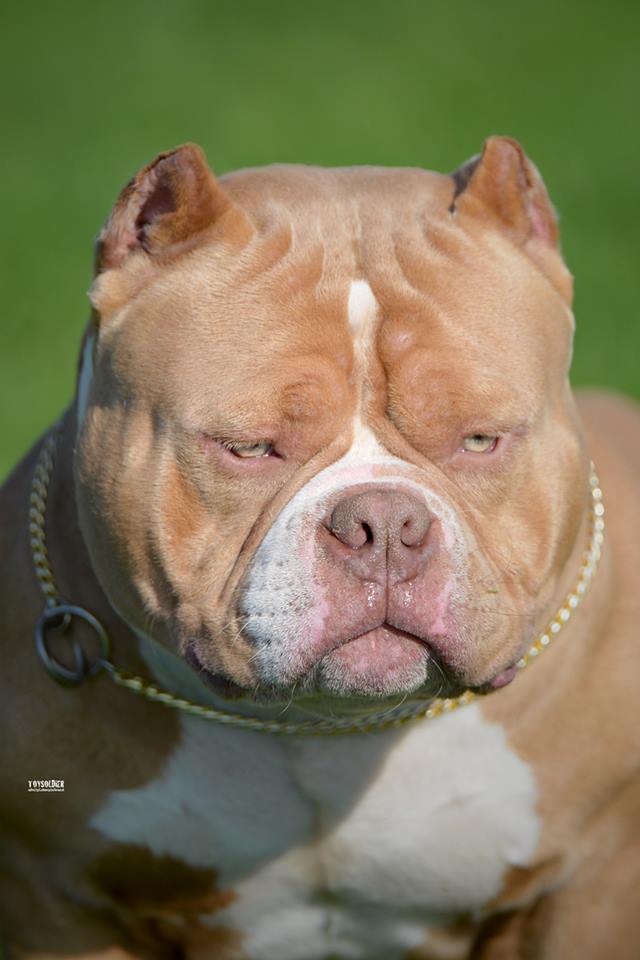






 It is real, and when you’re in it, and can’t see out of it, it is absolutely hopeless. I knew my mom couldn’t bear to lose another son.I write this not as a melodramatic story on what I went through, I am writing this for anyone going through the same. I was hopeless. 12 different times, in 2 different states, and once in Mexico.. I traded my freedom for a jumpsuit and some shitty slippers.